
ECAR Study of the Technology Needs of Students with Disabilities (2020)
Understanding how academic technology can better support students with disabilities—and improve learning for all.
Project Overview & Approach
Students with disabilities represent a significant population in higher education, yet their technology needs are often misunderstood, inconsistently supported, or overlooked entirely. While 19% of U.S. undergraduate students report having a disability, the actual number is likely much higher, as many choose not to disclose this information. These students face unique barriers in coursework, access, participation, and retention—challenges intensified during the rapid shift to emergency remote teaching in 2020.
To help institutions better understand these needs, Dana and the ECAR Research team analyzed nearly 2,000 open-ended responses from students who self-identified as having physical or learning disabilities requiring accessible technologies or academic accommodations.
The goal:
Identify how instructors and institutions can use technology to create equitable learning experiences—and highlight Universal Design for Learning (UDL) as a pathway to inclusion for all students.
This study became EDUCAUSE’s first large-scale, student-voiced analysis of disability-related technology needs.
Exploratory Understanding
1. Source Data: 2,000 Open-Ended Responses
Researchers examined detailed student narratives describing how technology either supported or hindered their academic success. Themes were derived directly from student experiences, not institutional assumptions.
Students were asked:
“What is ONE thing you would like your instructors to do with technology to enhance your academic success?”
Their responses revealed powerful patterns around accessibility, access to materials, and inclusive teaching practices.
2. Vulnerability & Equity Context
The study contextualized disability-related technology needs within larger structural barriers:
Higher dropout rates for students with disabilities
Lower graduation rates compared to nondisabled peers
Hidden disabilities and underreporting
Increased academic risk during COVID-19 remote learning
This framing highlighted that accessibility failures disproportionately harm already vulnerable learners—and that equitable technology practices benefit all students.
3. Thematic Coding & Analysis
Two overarching themes emerged:
Theme A: Online Access to Materials and Resources
Students consistently requested digital access to:
Class notes
Presentation slides
Assignments, tests, and quizzes
Recorded lectures
They emphasized the importance of flexible, repeated access—particularly when taking notes is difficult due to disability, or when health issues cause missed classes.
Theme B: Teaching with Technology
Students expressed strong preferences for:
Clear, consistent use of the LMS
Training for faculty on required tools
Multiple methods of content delivery (visual, auditory, interactive)
Incorporation of assistive technology tools such as captioning or text-to-speech
Their responses highlighted the essential role instructors play in creating—or obstructing—access.
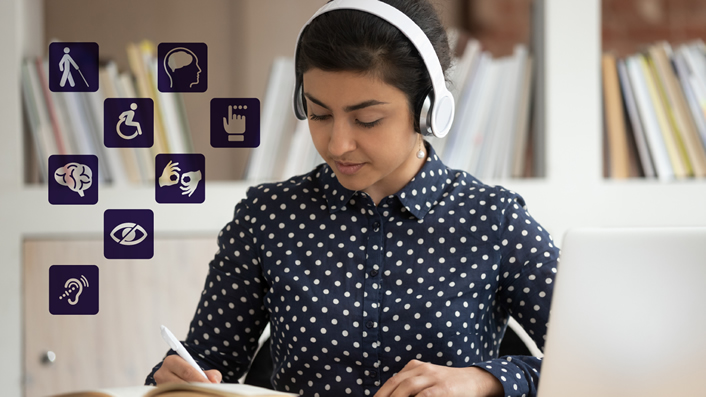
Dana’s research surfaced several insights that drove design direction:
1. Online Access Isn’t a Convenience—It’s a Lifeline
Students want digital materials available before, during, and after class to accommodate varied processing needs and disability-related barriers.
2. LMS Usage Is Often Inconsistent and Inaccessible
Students rely heavily on the LMS but report that many instructors use it sparingly or inefficiently. A disorganized LMS directly undermines access.
3. Universal Design for Learning Benefits All Students
Students consistently asked for:
Visual aids to support auditory lectures
Multiple modes of representation
Opportunities to review materials independently
These preferences align with core UDL principles—and are helpful for every learner, not just those with disabilities.
4. Assistive Technology Must Be Supported by Faculty
Students called for:
Captioned videos
Text-to-speech compatible files
Accessible digital formats
Instructor awareness of how assistive tech functions
Without faculty cooperation, assistive tools cannot function effectively.
5. Technology Gaps Existed Long Before the Pandemic
Emergency remote teaching amplified longstanding issues but did not create them. The findings emphasize the need for sustainable, long-term accessibility strategies.
Recomendations
Based on the research, Dana’s team outlined clear, actionable solutions for institutions and instructors:
1. Adopt Universal Design for Learning (UDL) Frameworks
UDL ensures materials are accessible to all learners and reduces the need for individual accommodations.
2. Provide Course Materials Digitally and Early
Slides, notes, assignments, and lecture recordings should be posted consistently and well-organized.
3. Standardize LMS Usage Across Courses
Institutions should develop guidelines for:
Course organization
Labeling and navigation
Uploading materials
Frequency of updates
This reduces cognitive load and barriers for students.
4. Train Faculty in Accessible Teaching Practices
Faculty should understand how to:
Caption videos
Select accessible materials
Format documents properly
Support assistive technology workflows
5. Expand Campus Awareness of Disability Experiences
Students’ open-ended responses demonstrate the emotional, logistical, and academic impact of accessibility barriers—and underscore why institutional culture change is essential.
Project Milestones
2019
Data Collection
Nearly 2,000 students with disabilities provide open-ended responses on technology needs.
2020
ECAR Report Publication
EDUCAUSE releases:
ECAR Study of the Technology Needs of Students with Disabilities, 2020
including full report, executive summary, infographic, and public resources.
2020
COVID-19 Emergency Remote Teaching
Study findings gain heightened relevance as accessibility gaps intensify during the pandemic.
Post-2020
Institutional Adoption & Influence
Report informs accessibility initiatives across higher education.
Used by CIOs, instructional design teams, disability services offices, and faculty developers.
Citations & References
ECAR Study of the Technology Needs of Students with Disabilities, 2020. EDUCAUSE Research.
Student data drawn from the 2019 EDUCAUSE Student Study (nearly 2,000 respondents).
National Center for Education Statistics (2015–2016). Fast Facts: Students with Disabilities.
UDL Resources:
“7 Things You Should Know About Universal Design for Learning” (EDUCAUSE, 2015)
Jessica Phillips (2018). “5 Tips for Accessibility and Universal Design for Learning.”
Thomas Tobin (2019). “Taking IT Way Beyond Accessibility: 5 + 4 = 1 Approach.”
Let’s Connect!
Explore my latest updates on Linkedin or review my resume for more detail.